Maid of Honor Reserves Expensive Getaway Without Group Consent—Now Bride Is Caught Between Upset Friends
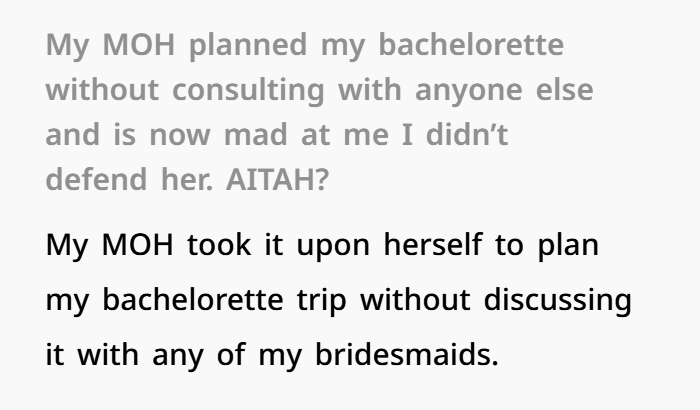
A soon-to-be married woman finds herself navigating challenging dynamics within her bridal party. Her maid of honor unilaterally arranged and paid for a destination bachelorette vacation without consulting the other attendants beforehand. She selected a coastal location the bride had previously mentioned and secured an Airbnb reservation for May. However, she failed to verify whether the timeframe, destination choice, or financial commitment suited everyone’s circumstances.
Once the vacation rental was secured, the maid of honor revealed her plan through a group message. She outlined the itinerary and requested each attendant to contribute their portion of expenses. This announcement caught several participants off guard. Traveling to a distant location requires significant financial outlay—flights, lodging, dining, local transit, entertainment, and miscellaneous costs accumulate rapidly.
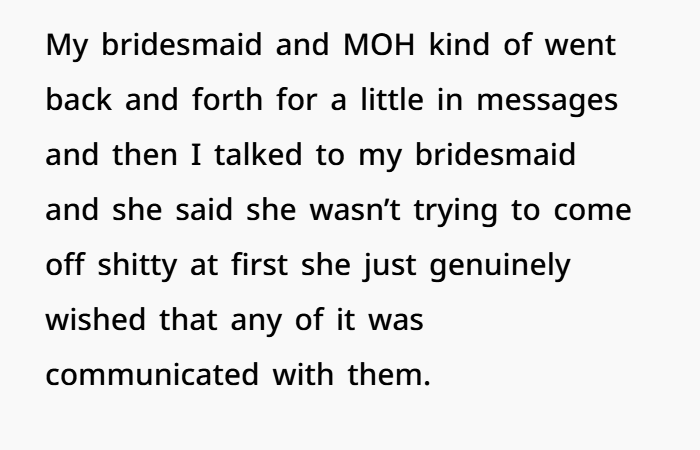
One attendant eventually questioned why the group hadn’t been included in preliminary discussions before finalizing the reservation. She believed the bridal party deserved an opportunity to evaluate the timing, associated expenses, and overall feasibility. The maid of honor responded defensively and expected the bride to defend her actions. Surprisingly, the bride acknowledged her attendant’s frustration was justified.
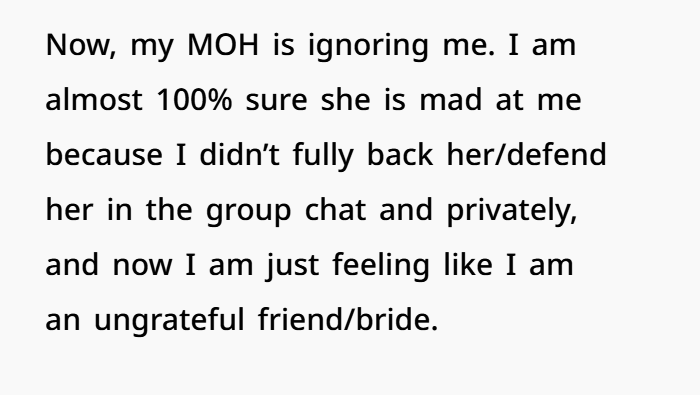
Currently, the maid of honor has withdrawn communication with the bride, intensifying an already uncomfortable situation. The bride values her friend’s initiative in organizing the celebration, yet she also believes informed consent should precede requests for monetary contributions toward group travel. She’s now questioning whether her response was dismissive or if unilaterally booking an expensive excursion without participant input represents the actual issue.



How the Maid of Honor Handled Planning Responsibilities
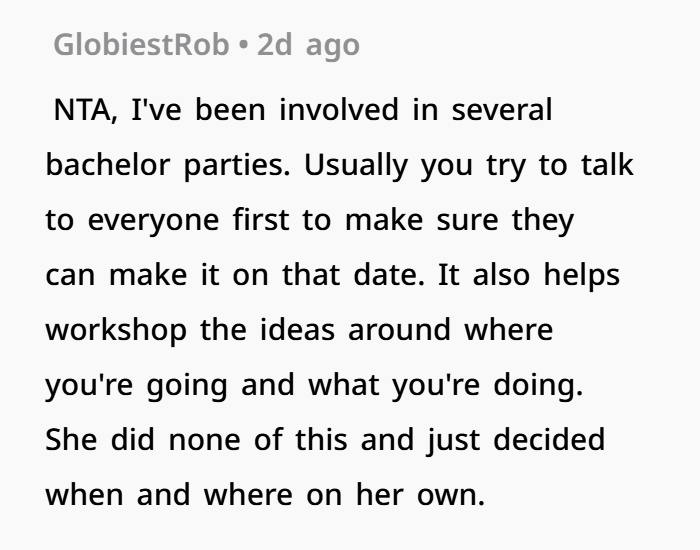
Wedding planning involves considerable stress and decision-making demands. From selecting venues and photographer services to arranging catering and accommodations, brides juggle numerous responsibilities.
The bachelorette celebration adds another layer of complexity.
Organizing a destination bachelorette experience involves substantial costs. Participants must budget for airfare, accommodations, meals, ground transportation, recreational activities, and additional travel expenses.
Successful group travel hinges on transparent communication before commitments are finalized.
However, this bride’s maid of honor handled planning unilaterally. She selected the venue, established dates, reserved lodging, and subsequently directed attendants to remit payment.
This approach created immediate complications.
The Destination Choice: Appealing in Theory but Problematic in Practice
The maid of honor didn’t select an arbitrary location randomly.
The bride had previously referenced this destination. She’d identified it as a potential option for her bachelorette celebration.
This particular island destination attracts visitors with its reputation for oceanfront activities, swimming facilities, and beachfront entertainment venues.
Such amenities suggested an enjoyable weekend escape.
However, complications emerged.
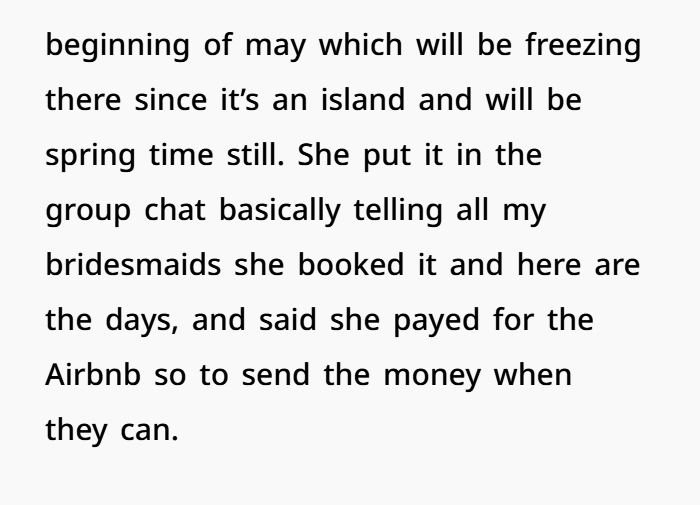
The maid of honor scheduled the trip for early May.
According to the bride, this island location experiences cold winters and unpredictable springtime conditions.
This timing could compromise the beach-focused itinerary the group anticipated.
Destination vacations represent substantial financial investments. Participants must cover transportation, lodging, restaurant expenses, local transit options, entertainment bookings, and miscellaneous necessities.
When weather prevents enjoying primary attractions, attendees may feel the expenditure wasn’t justified.
The bride raised this concern.
Unfortunately, the reservation had already been finalized.
Scheduling Without Input From Attendants
Climate concerns weren’t the sole problem.
The maid of honor had finalized the vacation without confirming availability with participants.
She introduced the plan through the group message after securing the reservation.
Her announcement essentially said: destination selected, dates locked in, property booked, please send payment amounts.
This positioning placed remaining bridesmaids in an awkward bind.
Destination bachelorette celebrations differ substantially from casual social gatherings.
Individuals manage employment obligations, dependent care responsibilities, financial constraints, and existing commitments.
Many face restrictions on available vacation days.
Certain attendants may have already scheduled vacations or family occasions.
Financial barriers present additional challenges.
Journey-based bachelorette parties encompass numerous expenses: airfare, vacation properties, dining establishments, vehicle rentals, activities and entertainment, apparel and accessories, and supplementary travel costs.
Individuals might additionally purchase travel protection plans for expensive getaways.
Despite receiving multiple months’ notice, not everyone possesses flexible finances for these expenses.
A particular bridesmaid chose to raise the matter.
Questioning Becomes Conflict
The bridesmaid didn’t indicate refusal to participate.
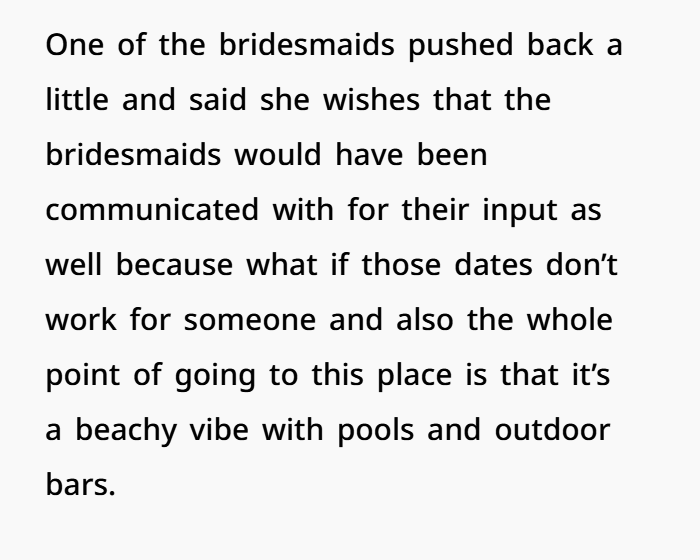
Rather, she questioned the rationale for excluding the group from preliminary decision-making.
She highlighted potential scheduling conflicts with the selected timeframe.
She additionally expressed reservations regarding timing, as beach experiences require suitable weather conditions that may not exist in May.
She then inquired about changing the reservation dates.
Her questions addressed practical considerations.
However, the maid of honor reacted unfavorably.
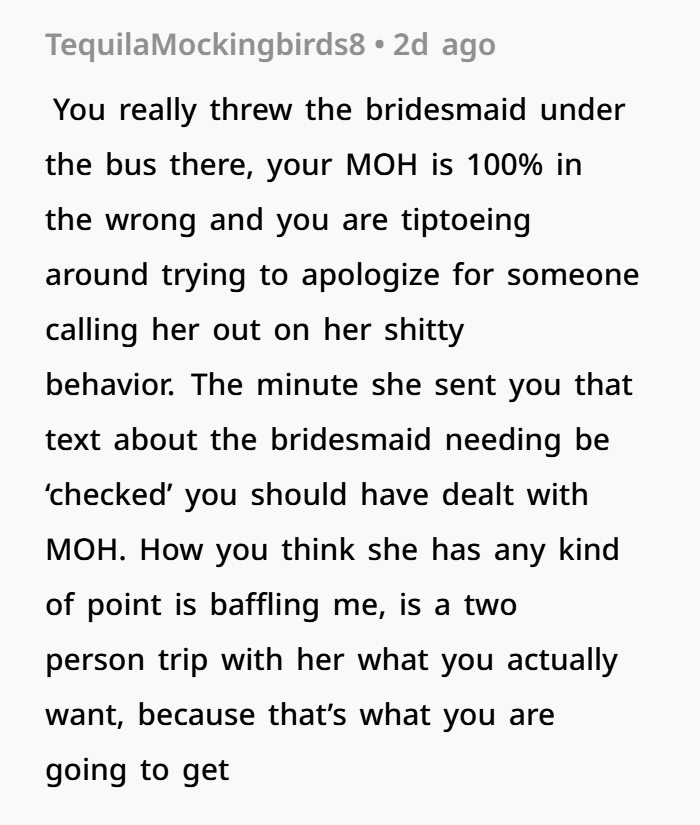
She messaged the bride privately, demanding she intervene with the bridesmaid before matters escalated.
A straightforward travel logistics disagreement had transformed into interpersonal conflict.
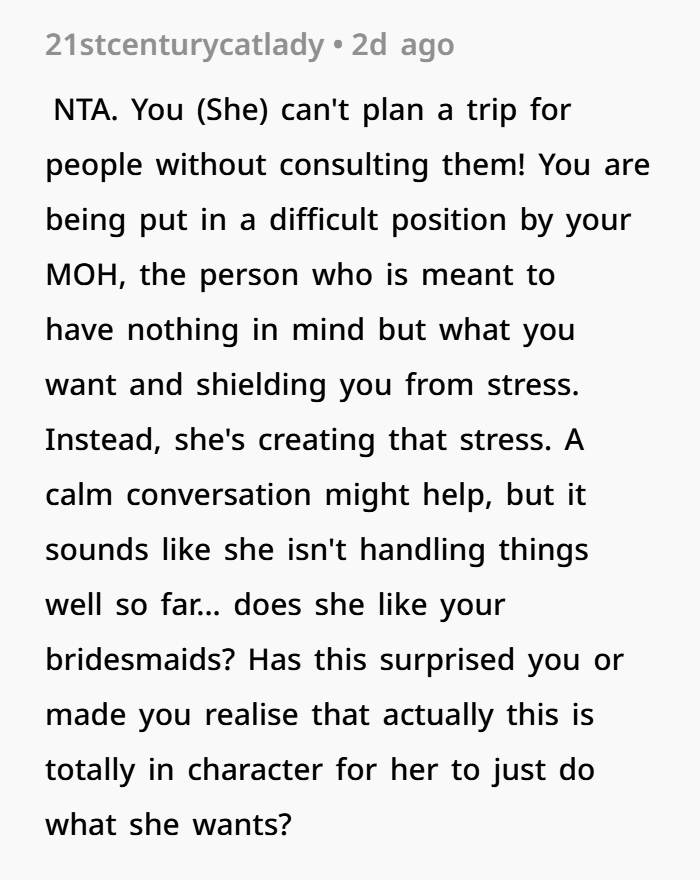
The bride suddenly found herself thrust into mediator status.
Disputed Narrative About Prior Approval
The situation intensified within the group communication.
The maid of honor claimed she’d previously discussed everything with the bride.
She positioned this as fulfilling the bride’s exact preferences.
But the bride’s recollection contradicted this account.
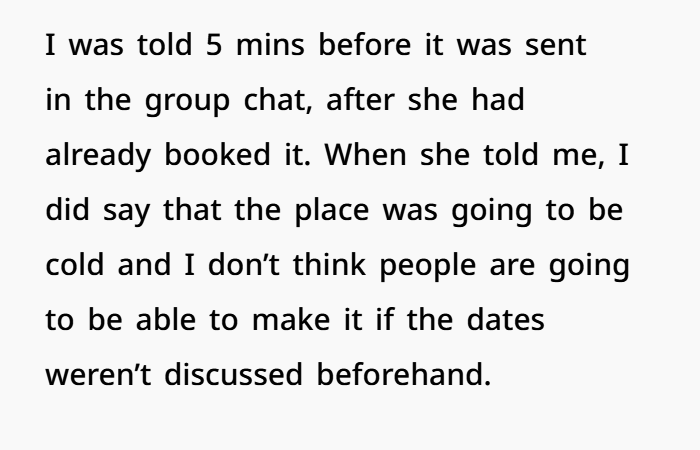
She recounted that the maid of honor mentioned plans merely moments before publishing in the group message.
The rental had already been reserved at that moment.
Furthermore, the bride immediately expressed reservations.
She mentioned seasonal weather challenges.
She worried bridesmaids couldn’t attend because nobody had verified their calendars.
Therefore, the bride hadn’t provided complete endorsement.
In reality, she harbored identical concerns as the questioning bridesmaid.
Expectations Versus Reality
The maid of honor appeared similarly dissatisfied with the bride’s reservations.
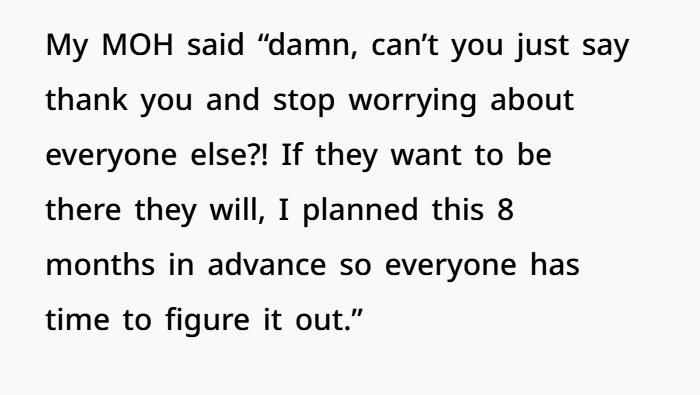
She felt the bride should demonstrate gratitude rather than questioning attendee participation.
She contended that eight months constituted reasonable preparation timeframe.
Admittedly, eight months surpasses several weeks’ notice significantly.
However, advance notification doesn’t resolve all obstacles.
Extended timelines don’t guarantee workplace flexibility.
Early awareness doesn’t ensure financial capacity for expensive travel.
Additional time doesn’t eliminate childcare or family care obligations.
Perhaps most significantly, people frequently hesitate committing financially to accommodations they never authorized.
This generates psychological pressure.
Once funds are invested, individuals may feel compelled accepting the arrangement.
The Bride’s Balanced Perspective
The bridesmaid and maid of honor debated further through group messages.
Eventually, the bride arranged a private conversation with the bridesmaid.
The bridesmaid explained she wasn’t attempting to create problems. She merely wished all participants had been consulted before finalizing arrangements.
Next, the bride met with her maid of honor.
She attempted recognizing each friend’s position.
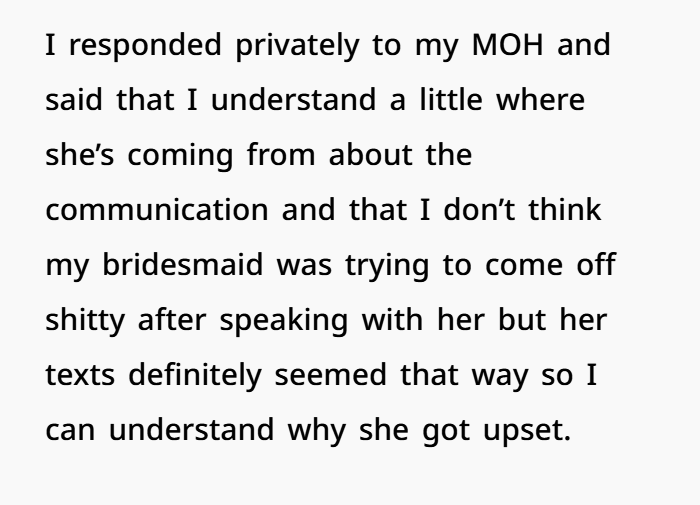
She conveyed to the maid of honor that she comprehended why the bridesmaid felt frustrated regarding insufficient communication.
She additionally acknowledged that the bridesmaid’s written comments might have sounded harsher than she intended.
The bride chose de-escalation over alliance-building.
But her maid of honor apparently disliked this balanced approach.
The bride reports receiving silence thereafter.
Questioning One’s Own Reaction
The bride began reconsidering her position.
Perhaps she was displaying ingratitude.
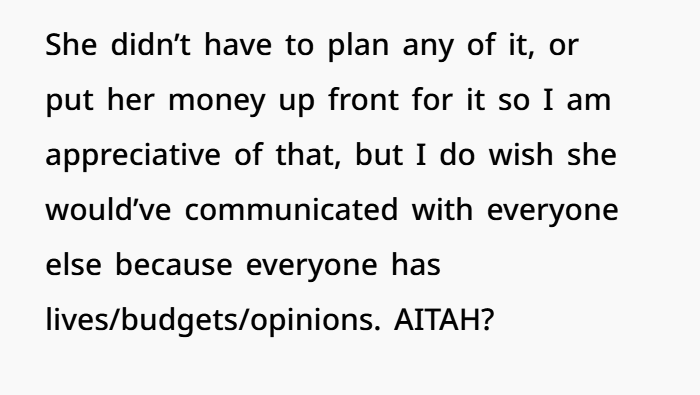
After all, her maid of honor invested hours in organizing the experience.
She performed research on available accommodations and personally financed the property rental upfront.
These contributions certainly warrant recognition.
Organizing shared travel demands significant effort.
Someone must evaluate vacation properties, examine transportation costs, explore regional attractions, and coordinate logistics.
However, appreciating someone’s labor doesn’t require endorsing every choice they make.
The bride can acknowledge her friend’s thoughtful intentions while maintaining that participants should approve major decisions before financial obligations are imposed.
These perspectives aren’t mutually exclusive.
Communication Should Precede Financial Commitment
This represents perhaps the core planning failure.
When multiple individuals will contribute funds toward travel, cost estimates must be established before reservations occur.
The bride’s preferences matter given this celebrates her milestone.
Yet other travelers are equally financially invested.
Minimally, the group deserves knowing when departure occurs and approximate bachelorette celebration budget requirements.
They should receive opportunity indicating whether those parameters accommodate their situations.
This becomes especially important with journey-based experiences.
Airfare, rental properties, dining, airport transportation, vehicle rentals, activities, and experiences compound expenses rapidly.
Prior to payment, the group might investigate multiple housing alternatives.
Perhaps hotel accommodations offer superior cancellation protections.
Possibly alternative rental properties cost considerably less.
Shifting travel dates might reduce transportation expenses.
For substantial trips, travelers frequently evaluate cancellation provisions and assess whether travel insurance suits their individual requirements.
These considerations represent routine components of collaborative vacation preparation.
The maid of honor position doesn’t authorize unilateral financial decision-making for other participants.
The Bride Shouldn’t Be Forced to Choose
The bride additionally encountered an uncomfortable dynamic when the maid of honor demanded she reprimand the bridesmaid.
These individuals constitute the same wedding party.
The bride presumably maintains affection for each person.
She shouldn’t face pressure creating confrontation simply because someone posed reasonable inquiries about schedules and expenses.
The bridesmaid was addressing concerns affecting everyone present.
Will everyone’s schedules accommodate participation?
Can everyone afford this specific vacation?
Can the existing booking be modified?
These represent reasonable questions for organizing group destination travel.
Manufacturing conflict wouldn’t address these issues anyway.
Advance Notice Doesn’t Eliminate Financial Barriers
The maid of honor believed eight months sufficed for everyone.
Certainly, additional time enables planning.
However, budget and timing represent distinct issues.
Someone could receive a year’s advance notification and still determine costs exceed their capacity.
Another person might lack sufficient paid leave.
Someone faces existing family responsibilities.
Yet another bridesmaid may already be spending substantial sums on plane tickets, accommodations, outfit purchases, fitting adjustments, ceremonial gifts, and supplementary wedding-related expenses.
Wedding participation expenses accumulate rapidly.
This makes establishing transparent wedding spending limits advantageous for everyone.
Thoughtful brides might contemplate what their attendants can realistically manage financially.
This doesn’t indicate ingratitude.
It demonstrates consideration for people supporting her celebration.
A More Effective Approach to This Situation
The group could benefit from restructuring the planning process.
Initially, they could verify everyone’s calendar availability.
Subsequently, they could establish a financially comfortable spending limit.
Then they could evaluate travel timeframes, airplane fares, accommodations, hotel alternatives, and transportation expenditures.
They could additionally investigate the present property’s modification or cancellation possibilities.
For considerable financial outlays, every participant should thoroughly review cancellation terms and independently evaluate whether optional insurance provides value for their circumstances.
Once fundamental information about expenses and schedules is understood, the maid of honor can continue arranging entertainment elements.
That encompasses restaurant selections, entertainment bookings, beach time arrangements, outfit planning, and weekend activities.
This methodology permits the bride experiencing her preferred celebration without imposing undue economic hardship on participants.
The Bride’s Position Has Merit
Based on the circumstances described, the bride’s position appears justified.
Her maid of honor merits acknowledgment for organizing the trip thoughtfully.
Nevertheless, securing lodging without verifying timelines, spending parameters, and availability with participants created an unnecessary complication.
Additionally, characterizing the bride as having pre-approved arrangements when she’d already raised concerns seemed inaccurate.
The bride needn’t choose between gratitude and pragmatism.
She can thank her maid of honor sincerely while advocating for improved communication practices.
Both positions hold validity.
The optimal resolution involves examining everyone’s availability, establishing realistic expense limits, determining whether current reservations can be modified, and proceeding accordingly.
Bachelorette celebrations should contribute positively to wedding festivities.
Thoughtful organization helps guarantee the group treasures the experience for beneficial reasons.
What Others Are Saying