Passenger Asked Mom to Stop Loud Reading Lesson on Full Flight, But Was He Wrong?
A passenger on a full evening flight found himself in an uncomfortable situation after asking a mother and her child to stop a loud reading activity for a short time.
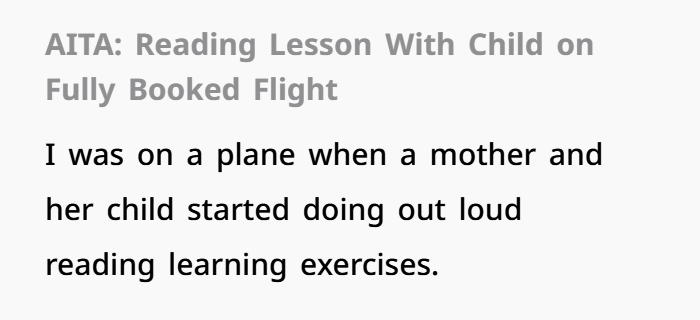
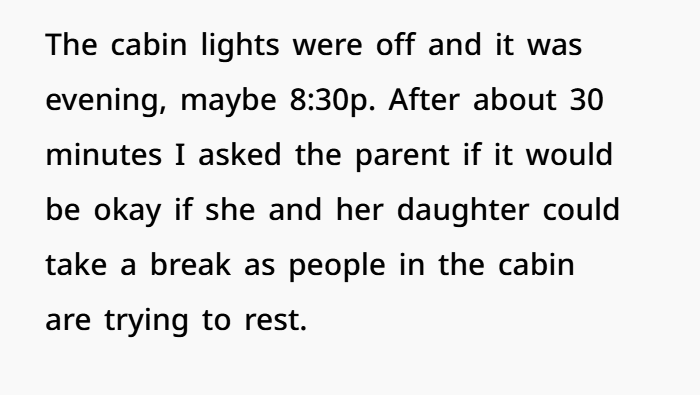
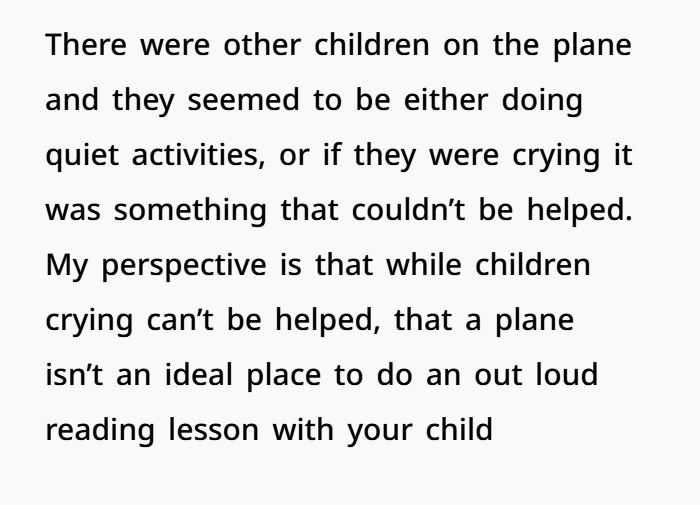
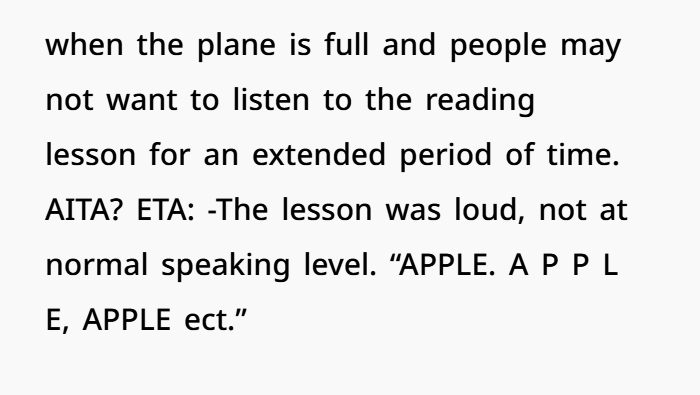
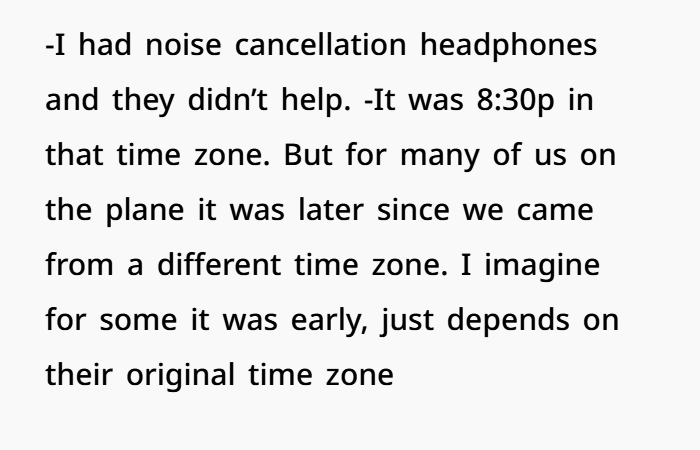
The child was practicing reading by saying words out loud, and the activity had been going on for around 30 minutes. Meanwhile, the cabin lights were turned off, and many passengers were trying to relax or get some rest during the flight. At first, the passenger tried to ignore the noise.
However, after listening to the reading for quite some time, he eventually decided to politely ask the mother if they could take a short break.
He explained that the constant talking was making it difficult for nearby passengers to rest and asked if they could continue the activity later.
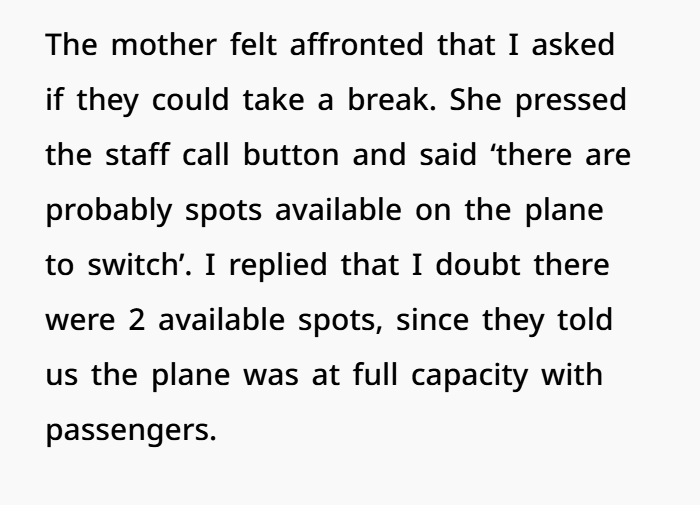
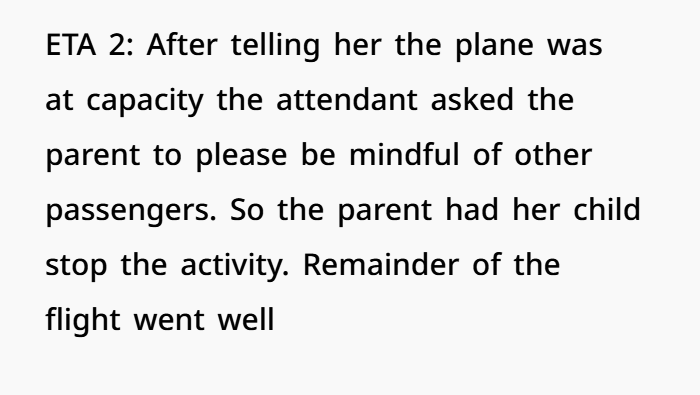
The mother apparently did not take the request well and contacted a flight attendant. She asked whether she and her child could move to another seat.
Unfortunately, the flight was completely booked, so there were no other seats available.
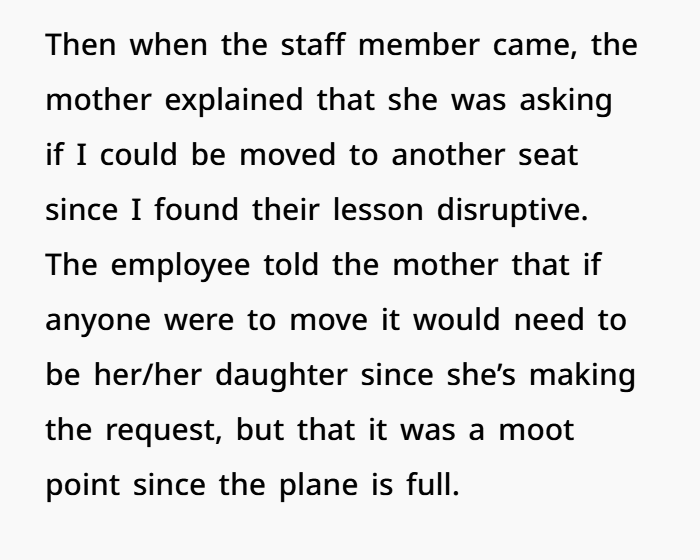
The flight attendant explained the situation and later reminded the parent to be considerate of the other passengers, especially since many people were trying to rest during the evening flight.
After that conversation, the child stopped the reading activity. The rest of the flight was much quieter, and the situation did not turn into a larger confrontation. Now, the passenger is wondering whether he handled the situation appropriately.
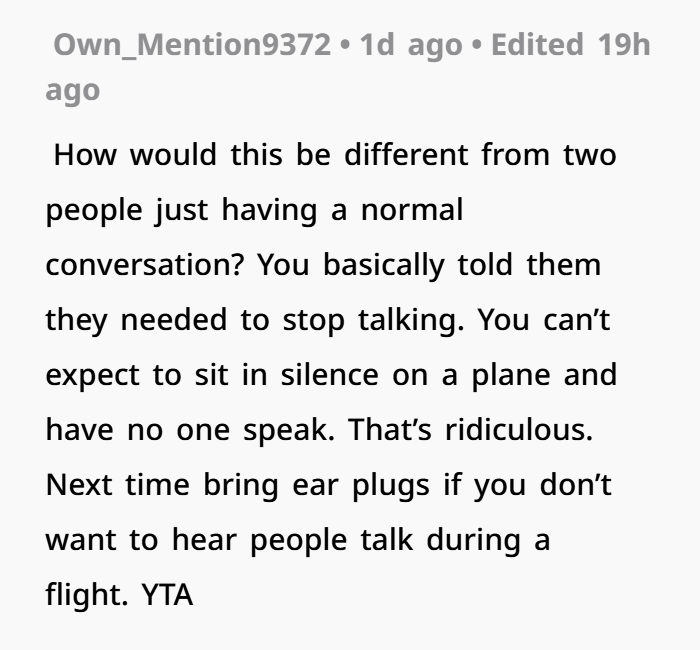
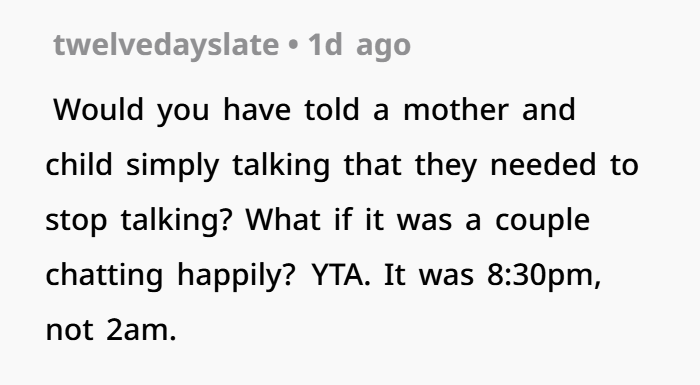
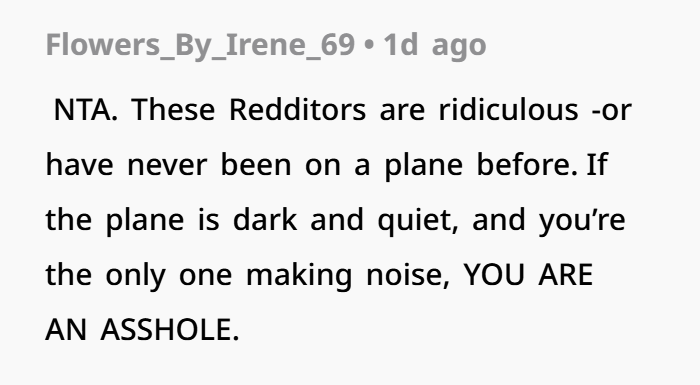
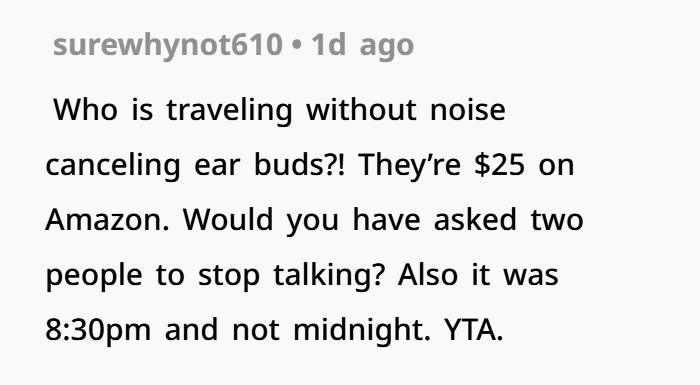
Was it unreasonable to ask a child to stop reading out loud for a short period?
Or is it reasonable to expect some level of quiet when you’re on a full evening flight with the cabin lights off and people trying to rest? The situation raises a common question about airplane etiquette: where should parents be allowed to let children learn and practice, and when should they consider the comfort of the other passengers?
Children naturally need opportunities to learn and practice new skills. At the same time, passengers on long or evening flights may reasonably want a quieter environment, particularly when they are trying to sleep or relax.
In situations like this, respectful communication can make a significant difference. The passenger did not demand that the child remain silent for the entire flight. He simply asked for a short break after the reading had continued for about 30 minutes.
In the end, the child stopped the activity, the cabin became quieter, and everyone was able to continue the flight without further conflict. The bigger lesson may simply be that shared spaces require some consideration from everyone.
Parents have to manage their children’s needs, while other passengers also have to be mindful that children may sometimes make noise. Finding a reasonable middle ground and communicating respectfully when something becomes disruptive can help prevent a small inconvenience from becoming a much bigger conflict.
Airplane Etiquette, Child Behavior, and Respecting Other Passengers
Flying can be an interesting experience because many different people have to share the same limited space for several hours.
Some passengers want to sleep. Others may want to work, watch a movie, listen to music, or simply relax after a long journey.
Parents traveling with children face their own challenges. They often need to find ways to keep their kids comfortable, entertained, and occupied during a flight.
Because everyone has different needs, airplane etiquette can sometimes become complicated.
Many disagreements between passengers are not necessarily about one person being completely right and another being completely wrong. Often, they are about finding a reasonable balance between individual needs and consideration for the people around you.
Why Noise Matters During a Flight
Airplanes are not completely silent environments.
Passengers understand that certain sounds are simply part of traveling.
People may talk to one another. Babies may cry. Someone might cough or sneeze. Flight attendants make announcements throughout the journey.
These things are generally unavoidable.
The situation can be different when the noise comes from an activity that can be adjusted or paused.
Whenever someone chooses to do something in a shared space, it is worth considering how it might affect nearby passengers.
This can include:
- Watching videos without headphones
- Playing music loudly
- Having loud phone conversations
- Speaking loudly for an extended period
- Continuing a noisy activity while other passengers are trying to sleep
A child practicing reading is certainly a positive activity. Learning and developing new skills are important.
However, the timing and volume can still matter.
During an evening flight, some passengers may be trying to rest or sleep, so keeping unnecessary noise to a reasonable level can make the experience more comfortable for everyone.
Understanding the Parent’s Side
Traveling with children can be difficult, particularly during long flights.
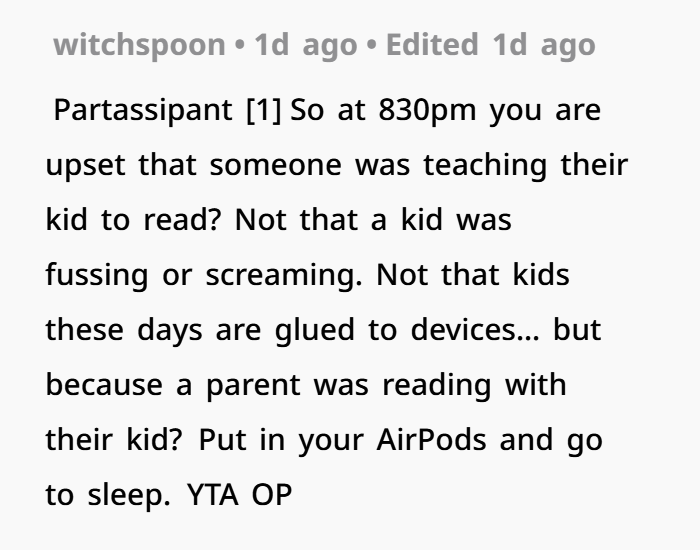
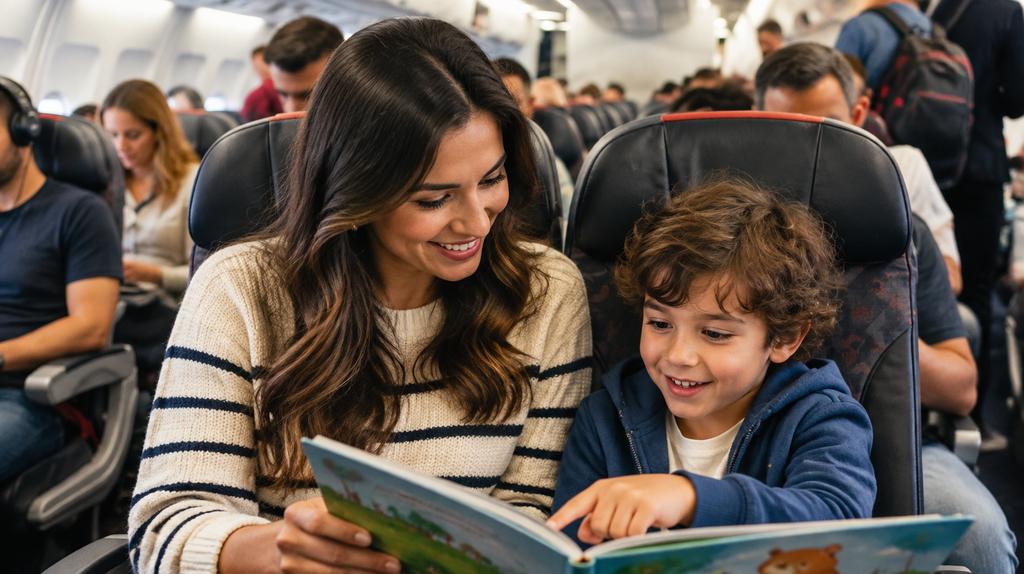
Parents often have to find creative ways to keep their children occupied. Reading can be a useful activity because it keeps a child engaged while also supporting their education.
The parent may have simply been trying to help the child practice an important skill or keep them occupied during the journey.
Parents can also feel uncomfortable when strangers comment on their children’s behavior.
They may worry that other passengers are judging their parenting without understanding how challenging it can be to travel with a child.
That feeling is understandable.
However, there is a difference between criticizing someone’s parenting and politely asking for a little less noise.
A passenger who asks for some quiet does not necessarily dislike children or object to a child learning.
Sometimes, they simply need a quieter environment to rest.
Finding Balance in Shared Spaces
Public transportation works best when people make small compromises.
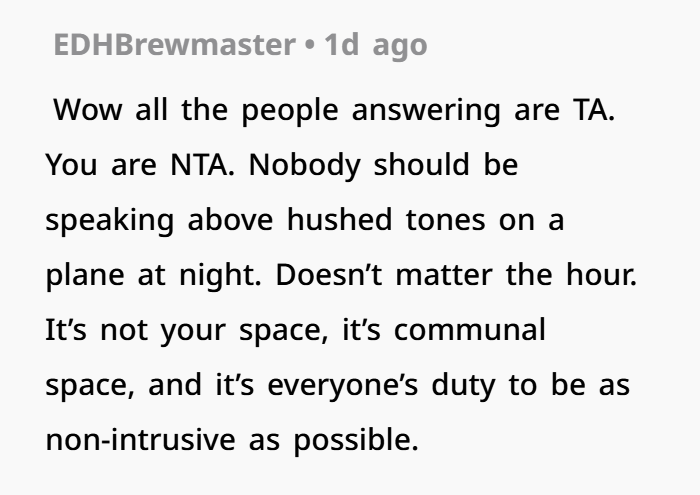
Passengers cannot reasonably expect an airplane to remain completely silent throughout an entire journey.
At the same time, people can still be aware of how their behavior affects others.
For example, a child quietly reading a book may not bother anyone nearby.
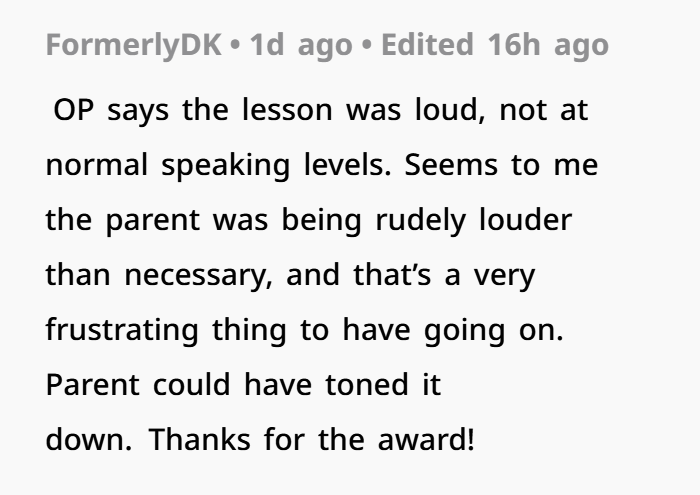
A child repeatedly saying words out loud for an extended period could be more difficult for passengers to ignore, especially during a nighttime or evening flight.
Both activities can have a positive purpose, but the volume and timing can make a significant difference.
Being aware of the people around you does not mean giving up everything you want to do. Sometimes, a small adjustment is enough.
How Flight Attendants Can Help
Flight attendants do much more than provide safety instructions and serve passengers.
They may also help manage disagreements and passenger concerns when problems arise during a flight.
When two passengers have an issue, a flight attendant may try to find a practical solution.
Sometimes that could involve changing seats, lowering the noise level, or simply reminding passengers to be considerate of one another.
However, changing seats is not always possible.
On a completely full flight, there may be nowhere else for a passenger to move.
In those situations, the simplest solution may be for everyone involved to make a small adjustment.
Comments You Can’t Miss